Study: students spend an average of 34 hours studying for 7 points on an exam
In 2024, 346 students from various degree programmes were surveyed about their grades, how much time they spend studying and their study methods.
1. Grades
German students get “unnecessarily” bad grades
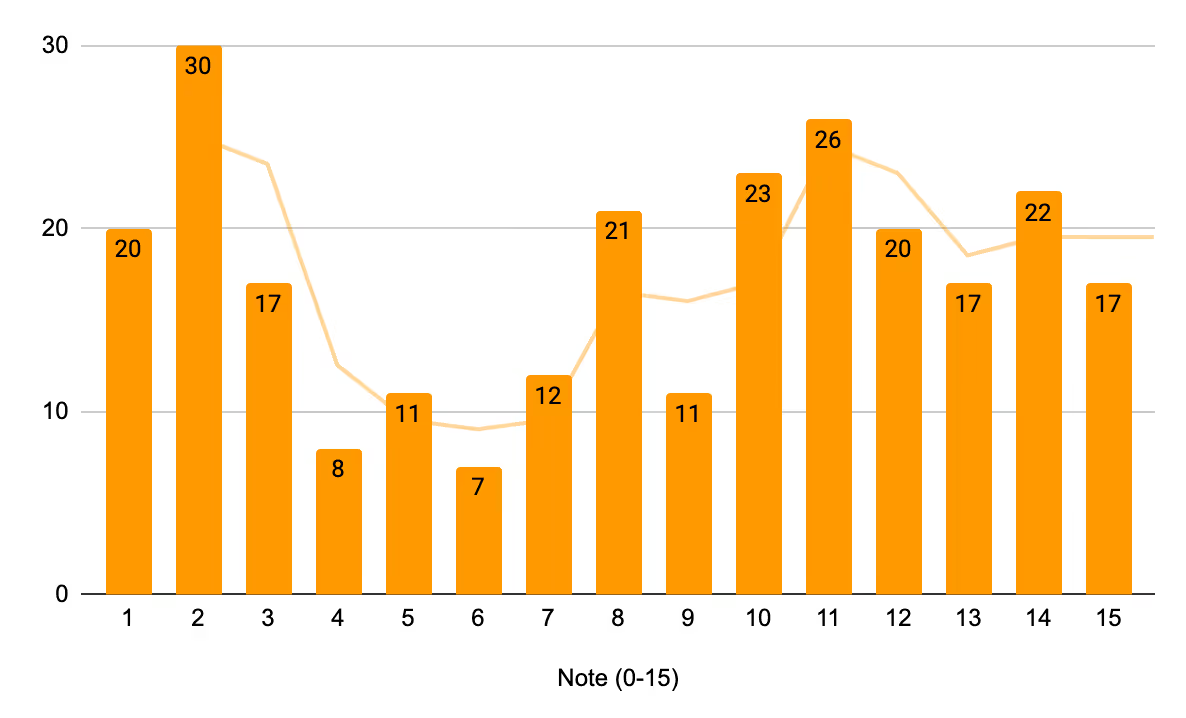
29% of the students surveyed failed their exams. And only 48% of these students achieved double-digit grades last semester. What stands out is that the “satisfactory range”, between 7 and 9 points, is relatively thin.
Why is that? To find out, the next section analyses the respondents’ study behaviour.
2. Study behaviour
For that, students study an average of 37 hours per semester
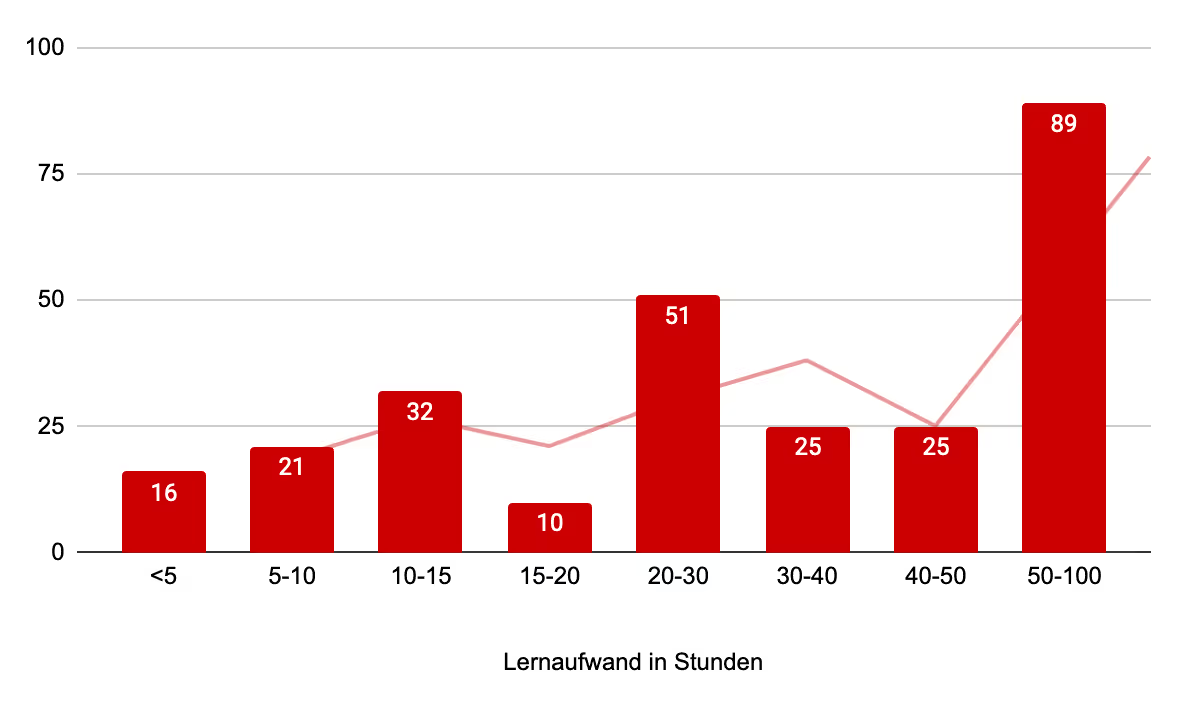
Only 6% of the students surveyed study less than 5 hours for an upcoming exam. 33%, by contrast, study between 50 and 100 hours – every semester.
It’s also important to mention that the survey used a maximum value of 100 hours. So it’s unclear whether, and how much, students cram beyond that.
If you look at the average grade of 7 points for an average of 34 hours of studying, one thing becomes very clear: studying could be much more efficient.
But which study method takes so much time? To answer that question, the next section shows how students actually prepare for upcoming exams.
3. Study method
The most popular study method costs time and nerves
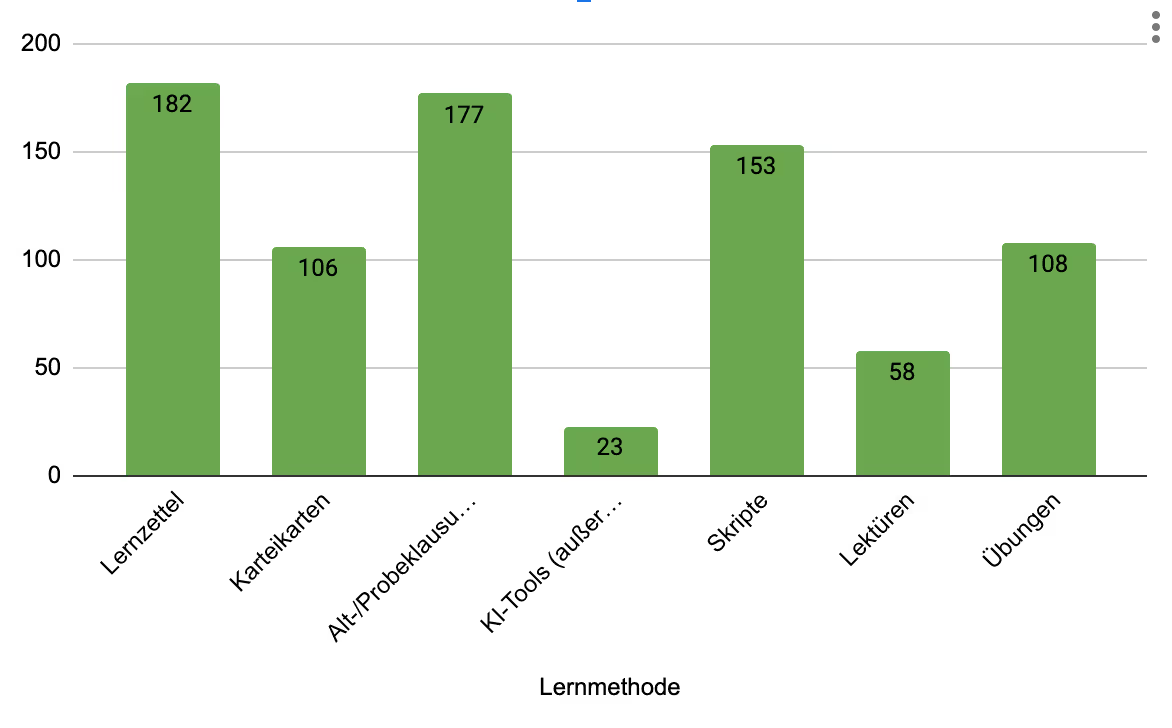
The most popular study method among German students is study notes. These are downloaded from the internet, shared in WhatsApp chats or made by the students themselves.
Past and practice exams are also very popular among students. As the second most popular study method, they’re mainly skimmed in the last 2 weeks before the exam and compared with the students’ own answers.
The lecture notes themselves are used a lot, as the study shows. Interviews revealed that notes are often written directly in the lecture notes and then serve as the basis for study notes.
4. Conclusion
The consequences of the “most popular” study method
In total, 346 students were surveyed about their study behaviour. The result: with an average of 34 hours of studying using study notes, their own notes and past/practice exams, 7 points on an exam is anything but satisfying. But where exactly are the problems, and what are their consequences? The following overview answers that question:
| Problem | Consequence |
|---|---|
| Study notes from the internet or WhatsApp aren’t tailored to your own goals and knowledge gaps. | Time is wasted because you “learn” content you either already know or that won’t come up in the exam at all. |
| Past/practice exams are unavailable or scarce and aren’t properly built into the study plan. | No realistic sense of where you stand, with “surprisingly” bad grades as a result. |
| Lots of messy materials that weren’t made for studying. | Students start studying far too late (the most common cause of cramming a week before the exam). |
But it doesn’t have to be this way. These findings point to ways studying at university or college can work more efficiently.
5. Solution
The study method in 4 steps
The results from the 346 students were used to reconstruct how efficient studying works in 4 steps. You’ll find the steps in detail in the StudyQuick study method.
- Set your target grade and assess where you stand
- Prepare your study materials in a targeted way
- Take in the content with the StudyQuick study method
- Test your knowledge and close knowledge gaps